Sticky Fingers
Team Project, August 2025 - June 2026
My Role
I worked as the sole designer on this project during my second year in the University of Utah’s Master Degree Program. The team was sized at about 15 people spread across production, art, and engineering. As the sole designer I pitched and iterated on the early early systems that would evolve into Sticky Fingers. As the game took shape I moved on to learning what made the game ‘fun’ using test levels since as a team we had nothing to base what made a level ‘good’ yet. Once we finalized the scope of our mechanics I then went to work designing and iterating upon the three levels our game would have, all while fine-tuning game feel and roughly implementing systems to ease some of the engineers’ workload.
What is Sticky Fingers?
Sticky Fingers is a two player cooperative arcade game inspired by the likes of games such as Qwop and Moving Out.
Each player controls one hand to interact with the world, but they’re not independent. Both players must work as a team to drag the body along all while stealing everything they can touch…
Play it on Steam!
What I did
Used Unreal Engine 5’s modelling tools to make whiteboard drawings into iterative block outs in engine.
Created prototypes of mechanics and UI elements using the blueprint editor for later engineer implementation.
Maintained a Confluence page and developed a style guide for team use so that members would have a reliable resource to reference.

The Bank (Prototype)
While this was the first proper level created for Sticky Fingers that could be completed, as a team we had a shared understanding that it would not be included in the release and instead existed to serve as a testing ground for game feel and mechanics.
Lessons we learned
Large spaces were fun to navigate for the players but without clear guidance testers tended to get lost.
Once players understood where they needed to go they ignored the ancillary areas and would head straight towards the goal.
Players enjoyed playing with the environment instead of just stealing everything.
Bollards were one the early navigational hazards
Aerial view of the first bank
The laser grid required players to move trash cans for cover
The Bank (Real)
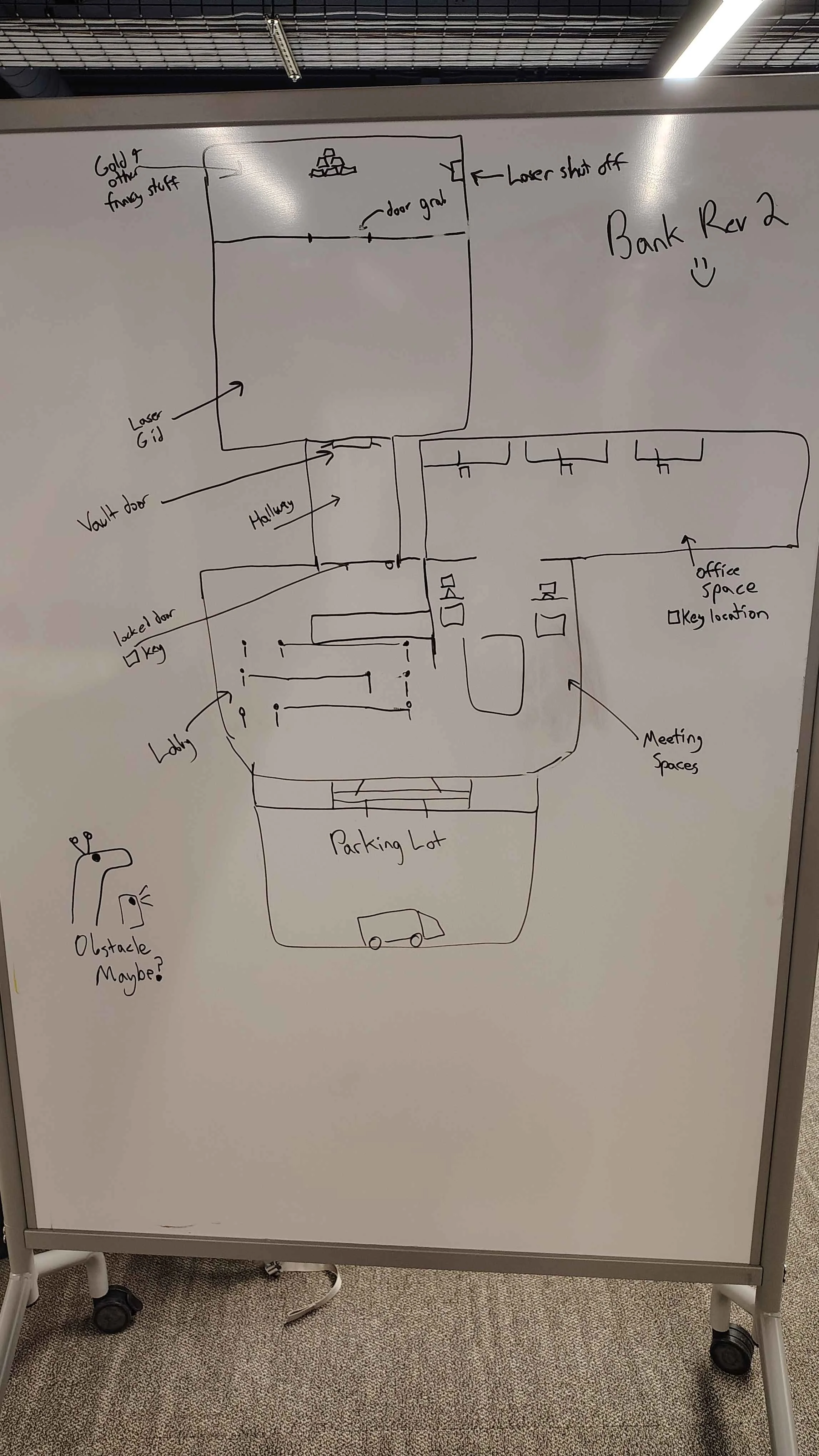
Rather than adjusting the bank built for testing, I instead opted to go for a complete fresh slate to incorporate the lessons we learned from early tests. A much more focused experience than before with more unique interactions with the environment.
Interactions
The bollards were turned into a navigational maze and were no longer a miss-able experience.
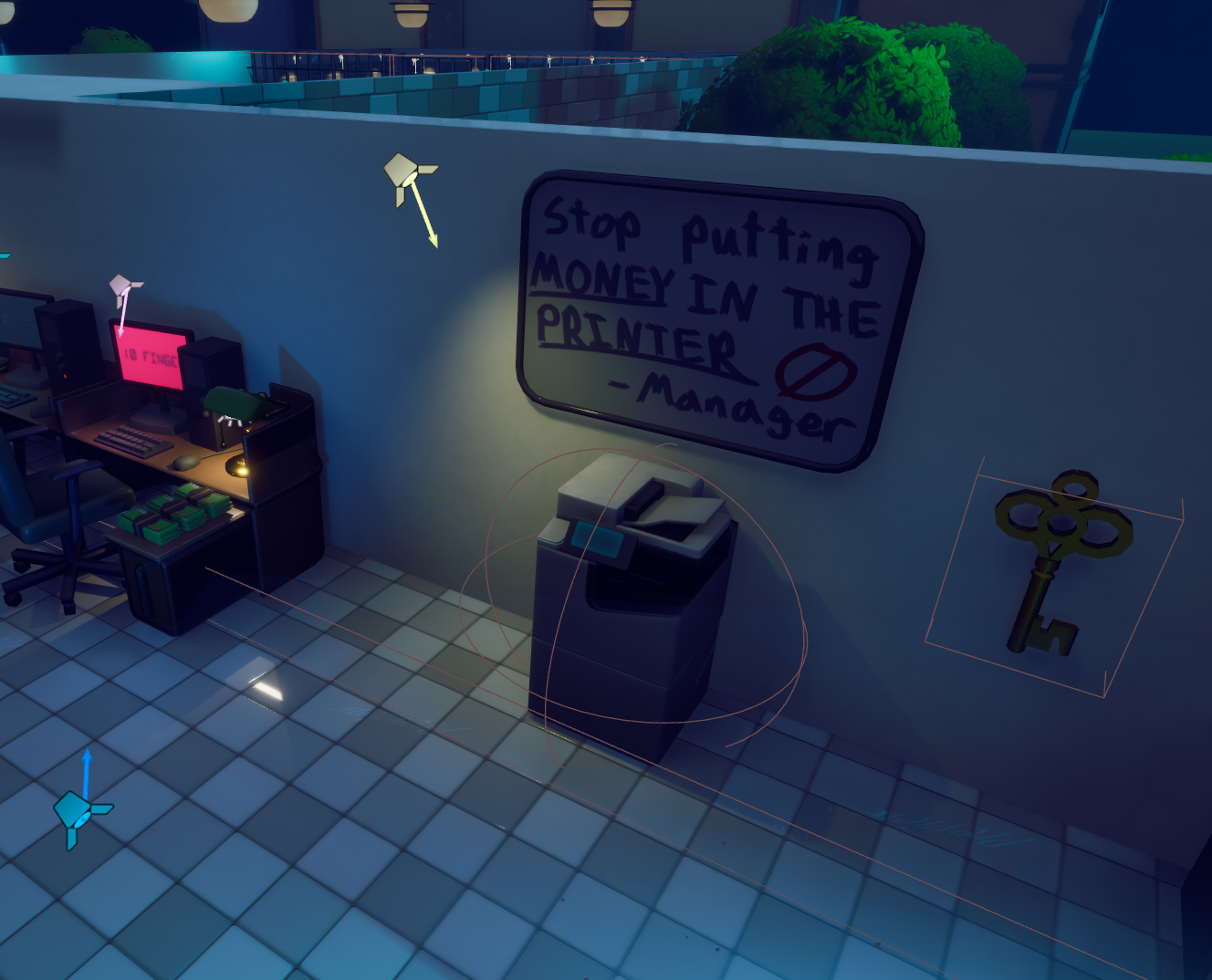
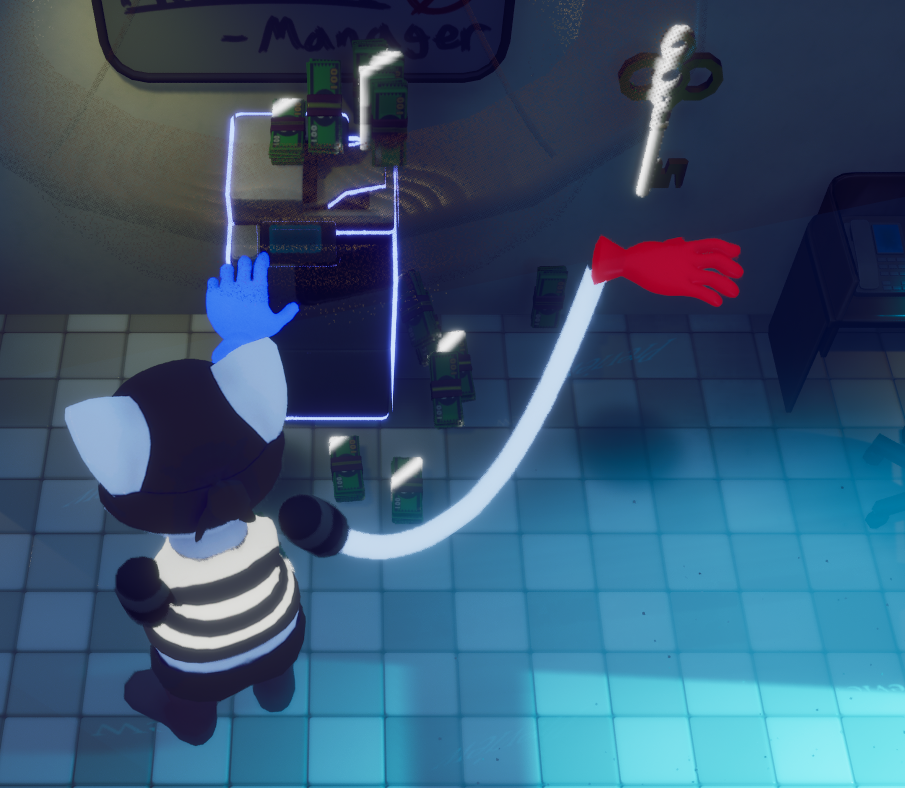
A money printer that will continue to print more money as long as you keep feeding it.
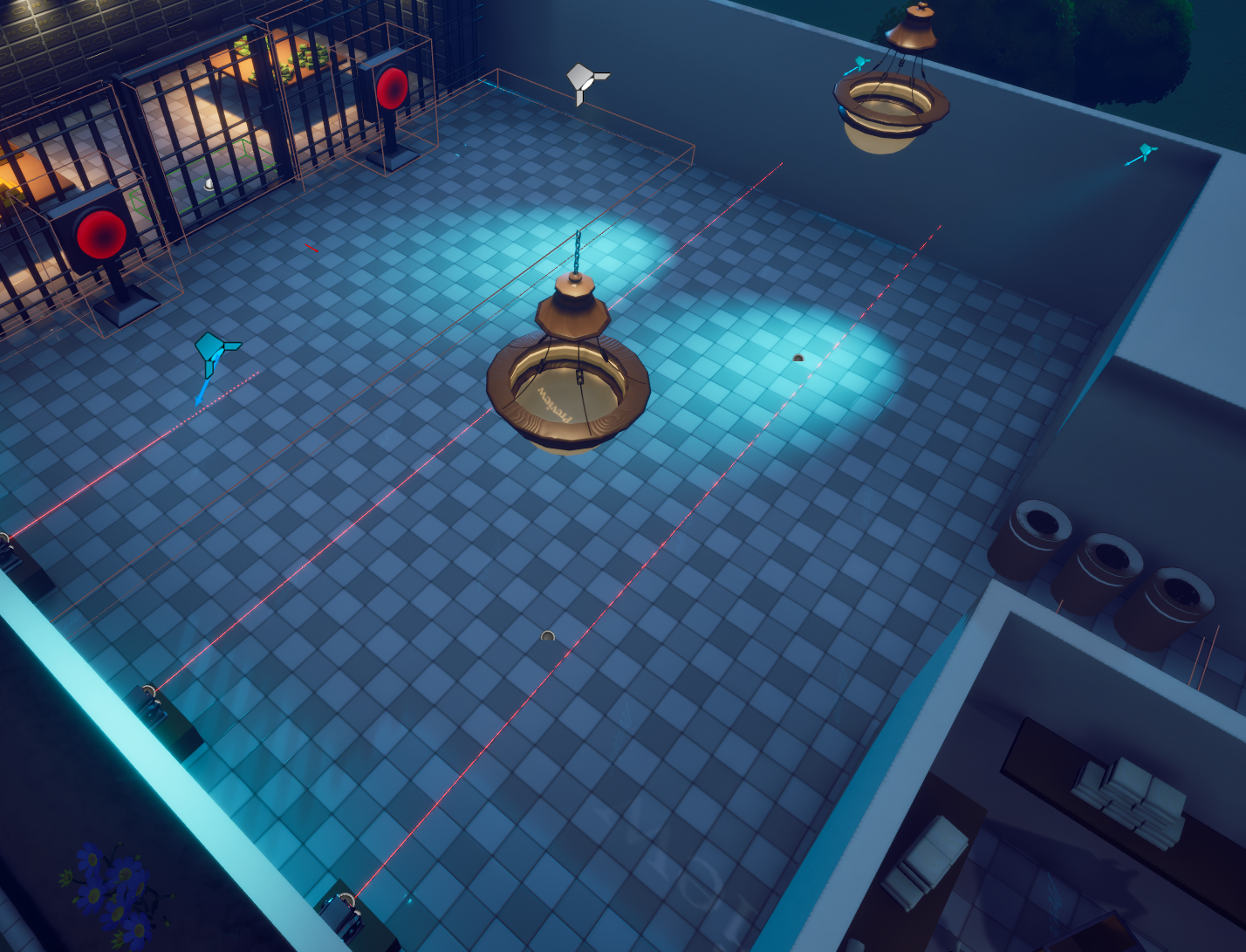
The laser grid returned in the vault in a more simplified form.
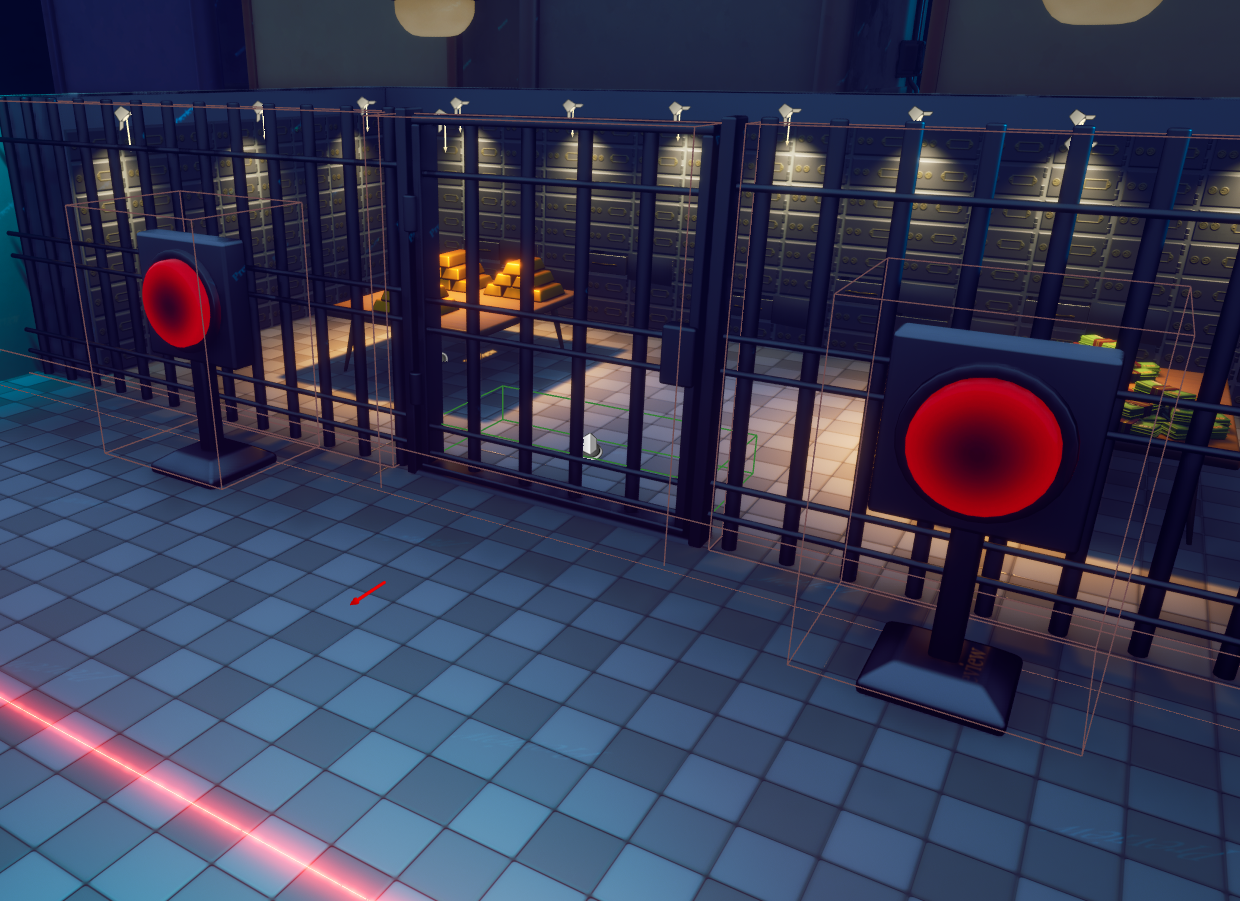
Opening the vault required the players to simultaneously grab the buttons.
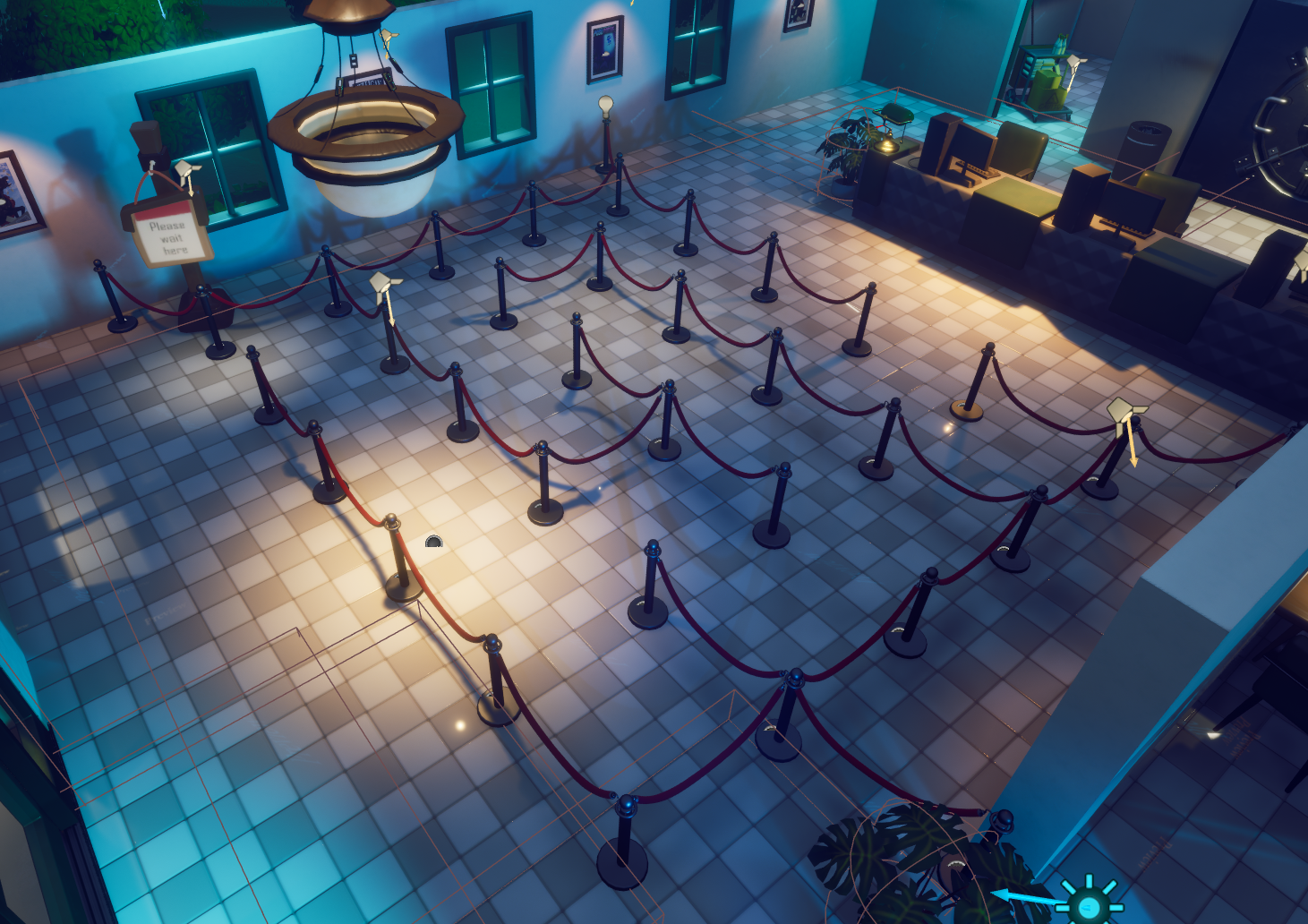
The bollard maze was made skip-able on the way out, both for comedy but also so players didn’t have to do it backwards.
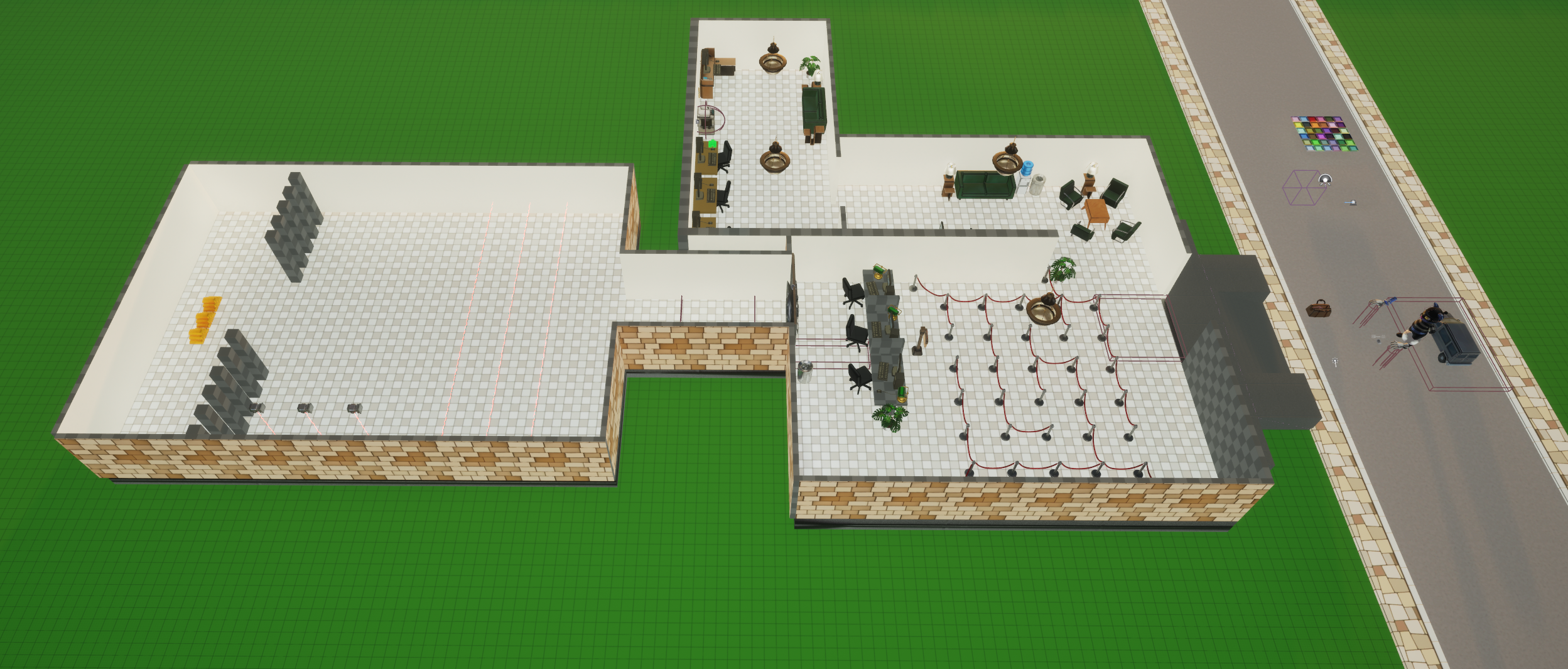
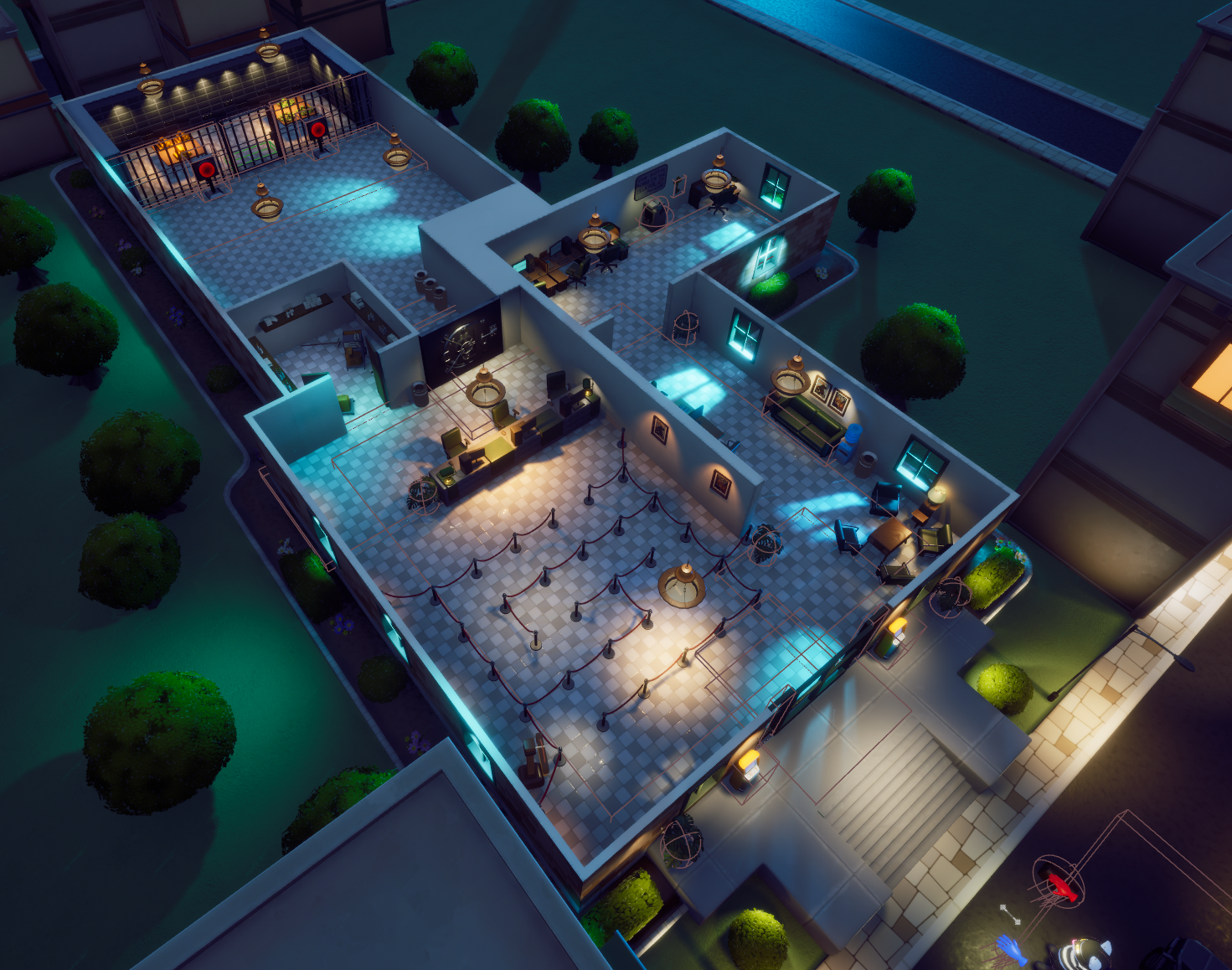
Whiteboard to release views of the bank
Dedicated players could infinitely print money.

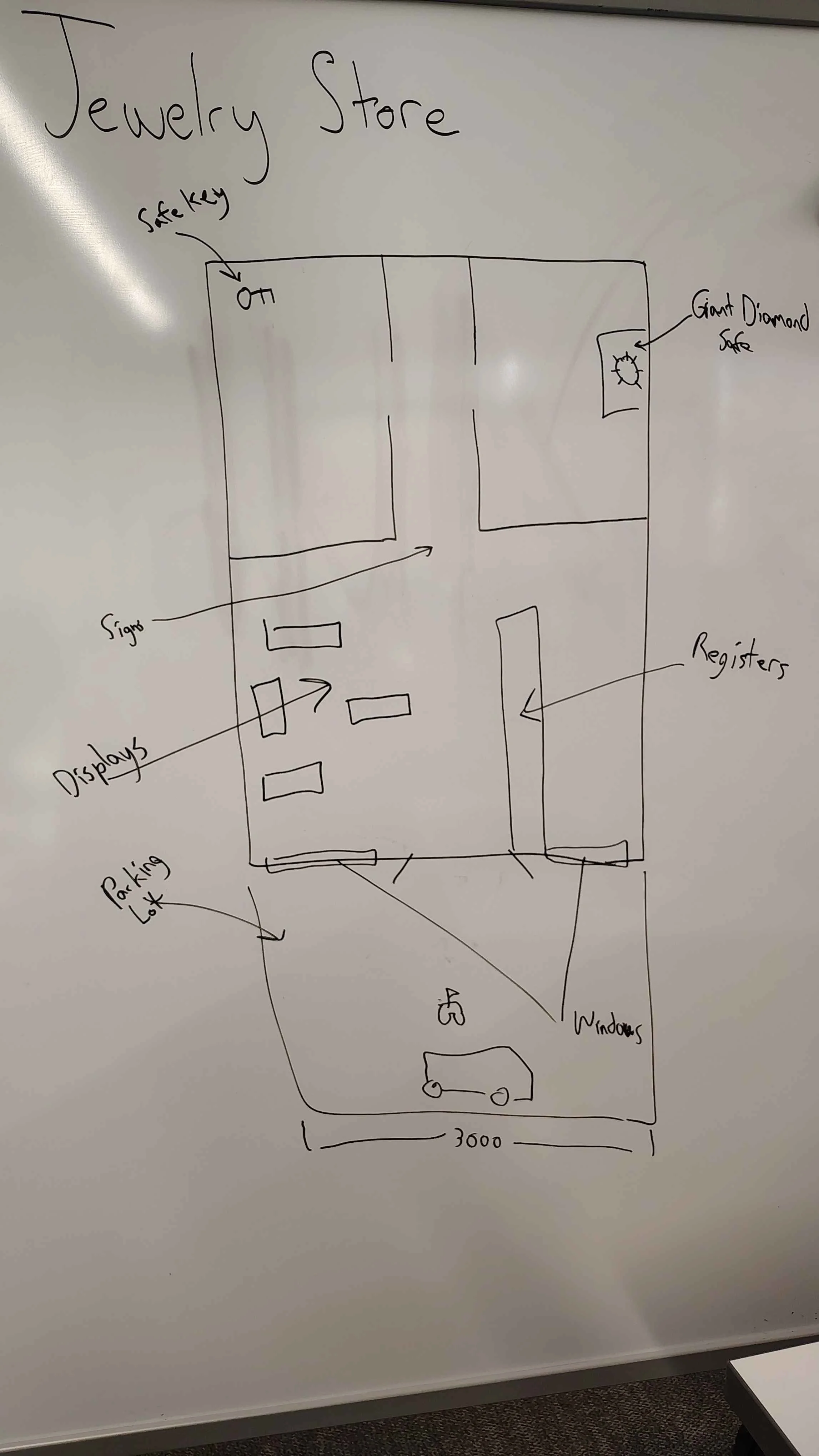
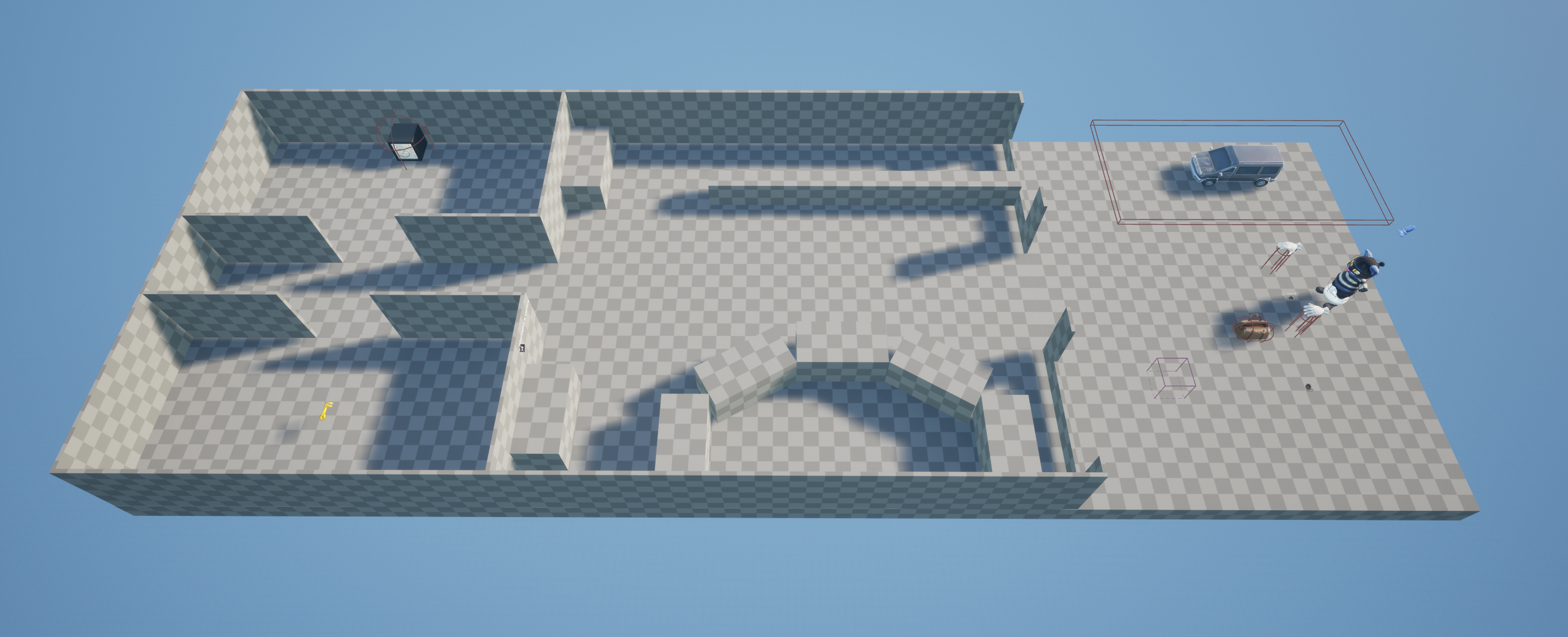
The Jewelry Store was intended to be the tutorial level for our players. The intent was to create a short and simple level for the players to get used to the mechanics of the game before throwing them into more complicated environments.
Goals
Have a simple introduction to acclimate players to the game.
Get players used to interacting with the environment.
Be challenge free to avoid frustration.
Did it work?
Mostly, the core idea of the Jewelry Store was that it was simple so there weren’t too many bells or whistles I or the team wanted to put into the level. One issue that I would solve on a second go around would be just increasing the size of the Jewelry Store. Proving that fresh testers are always necessary, by the time this level moved to testing our repeat testers had gained enough mastery that smaller spaces were not a challenge to navigate. However, upon launch we noticed many more fresh players getting stuck or caught inside this level.
Whiteboard to release views of the Jewelry Store
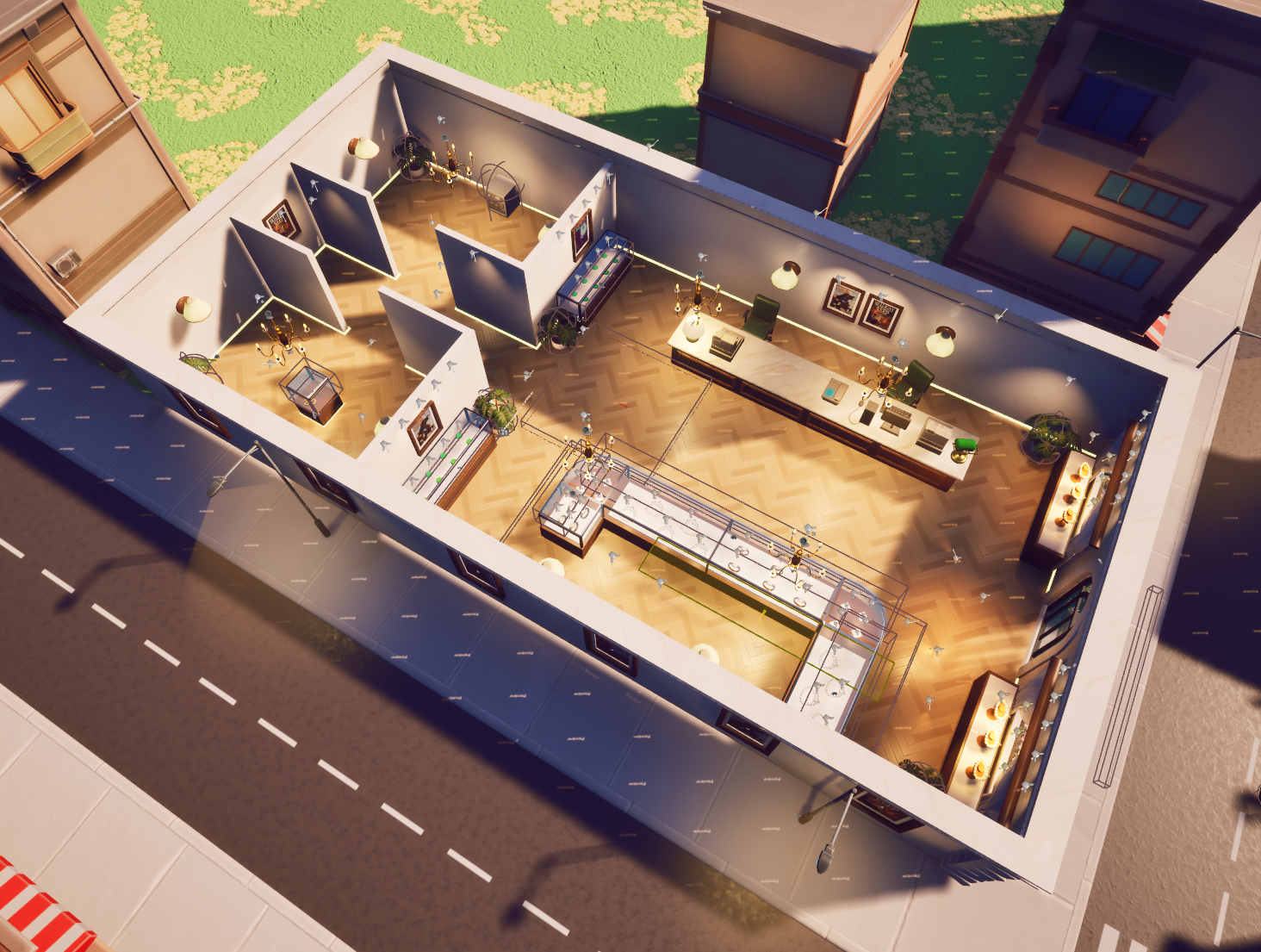
The glass on the cases was breakable, requiring the player to interact with it by either just running into it or using a different item to break it.
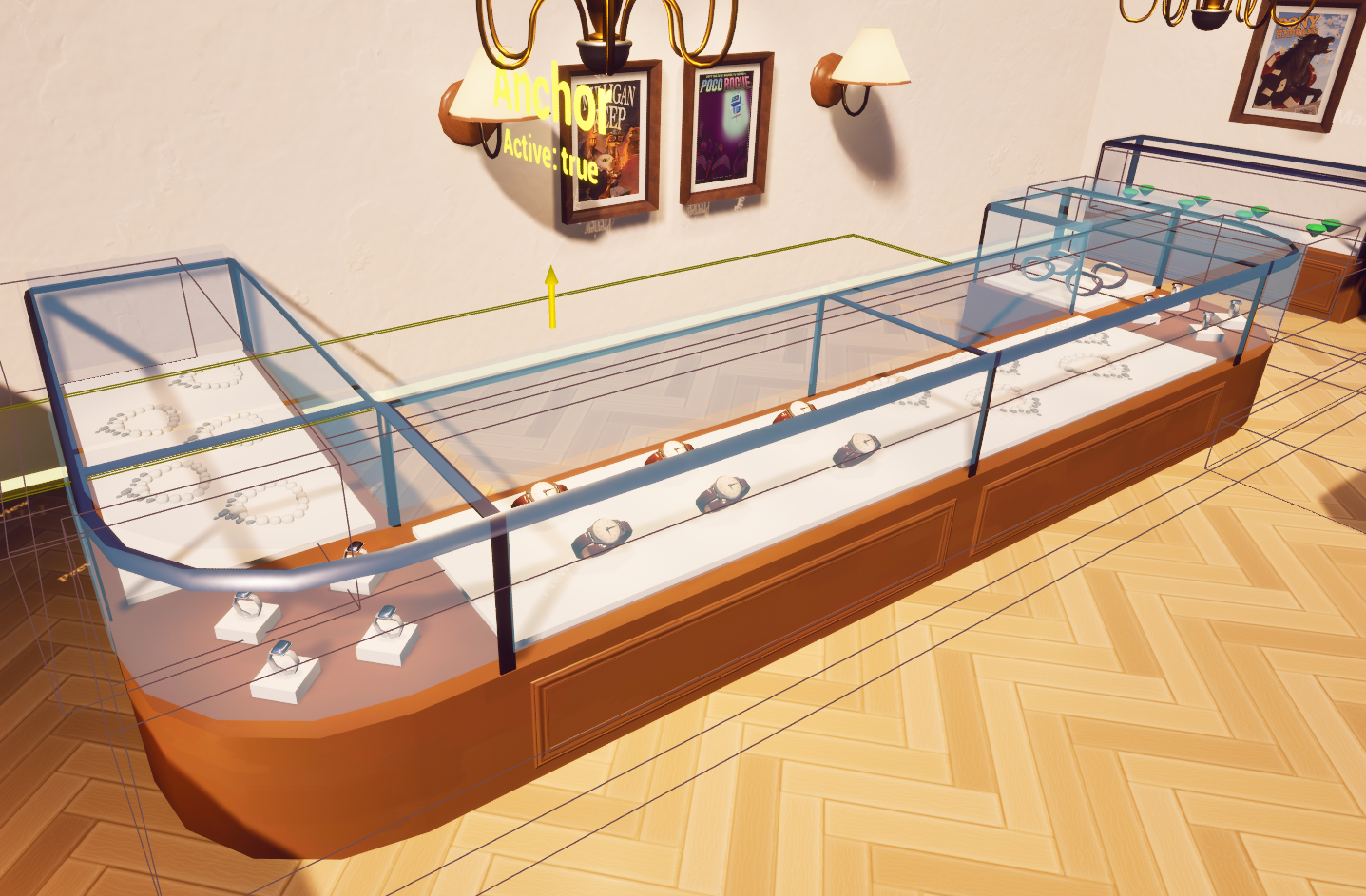
Jewelry Store

The Casino
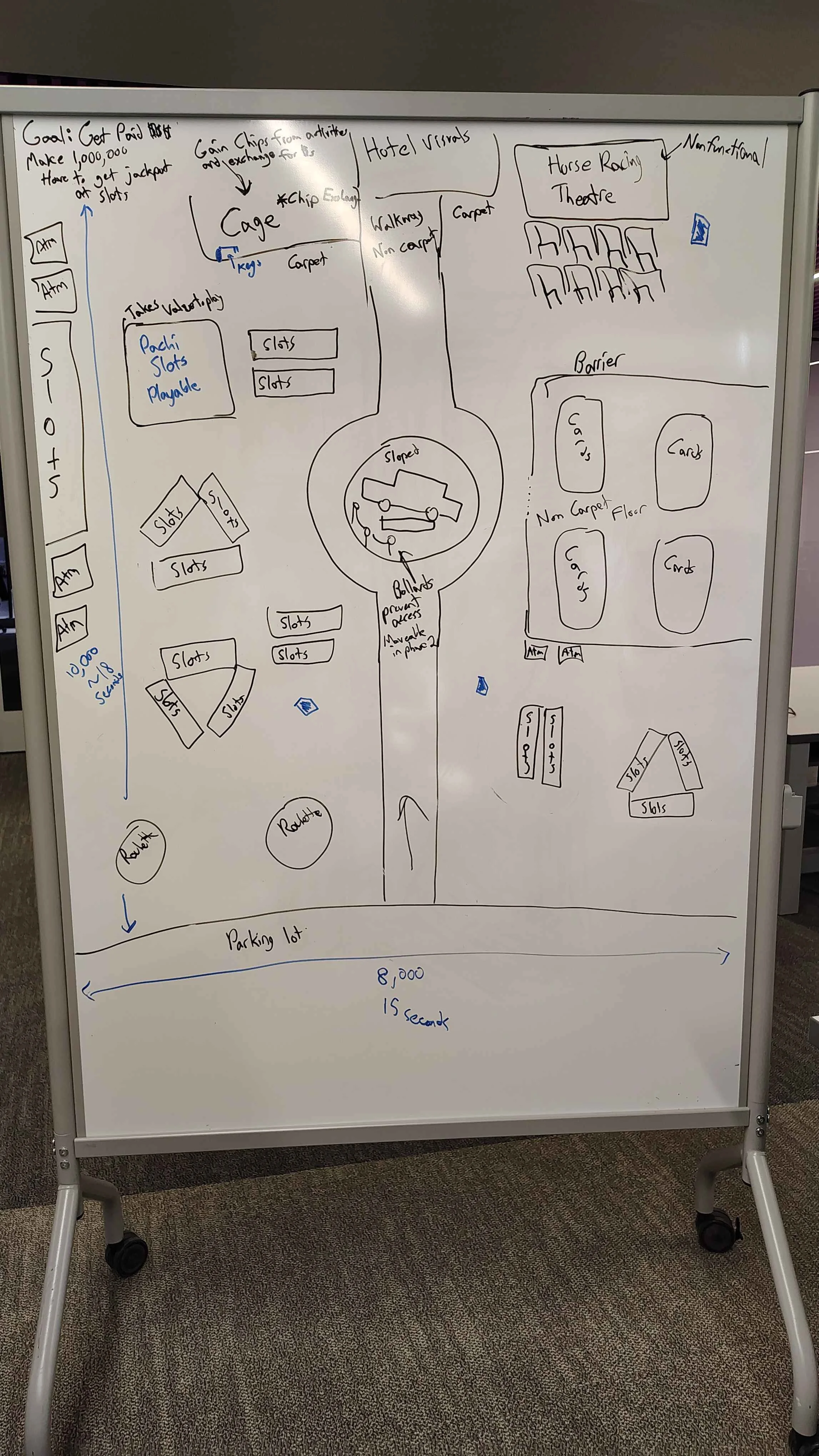
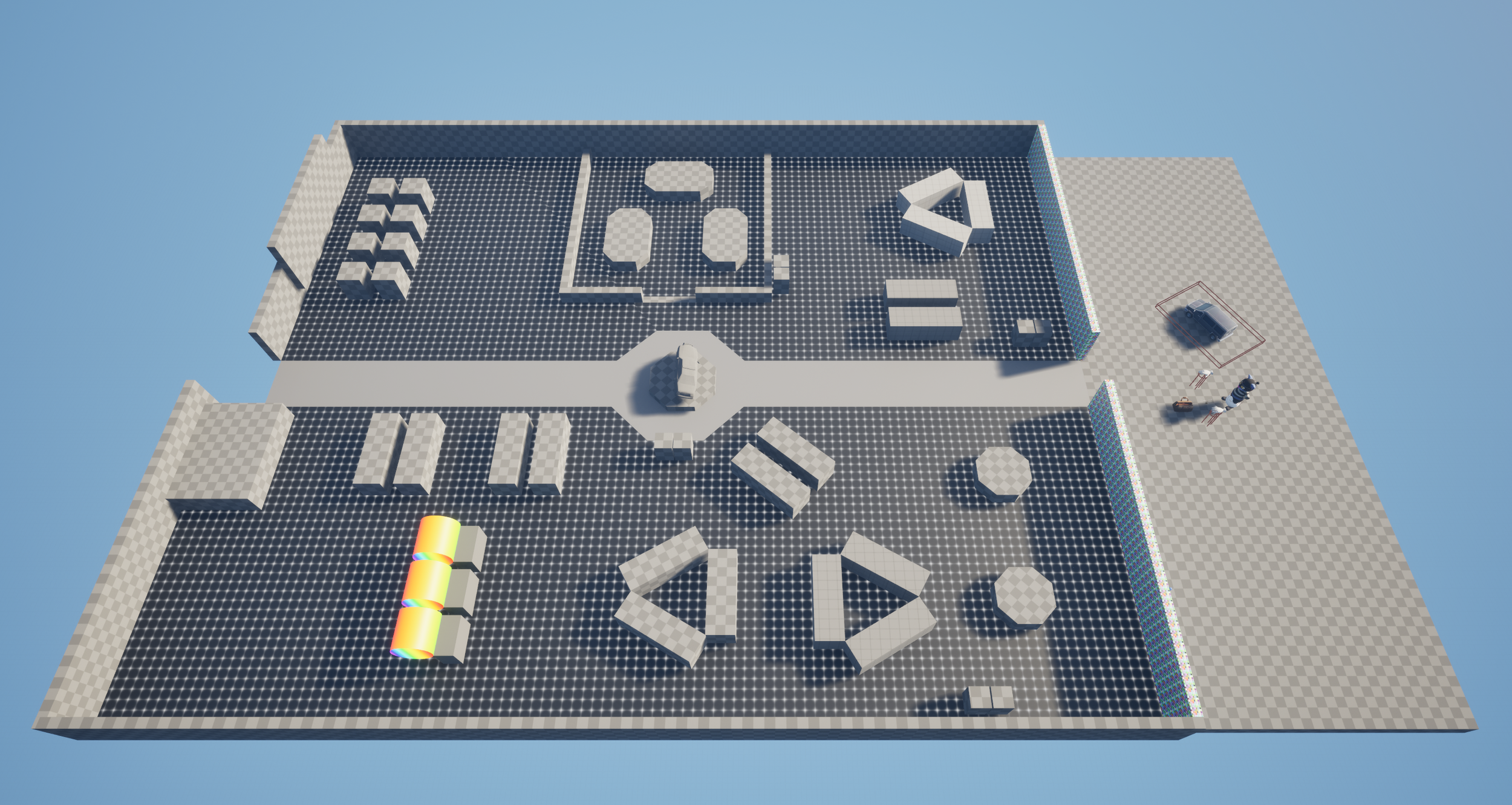
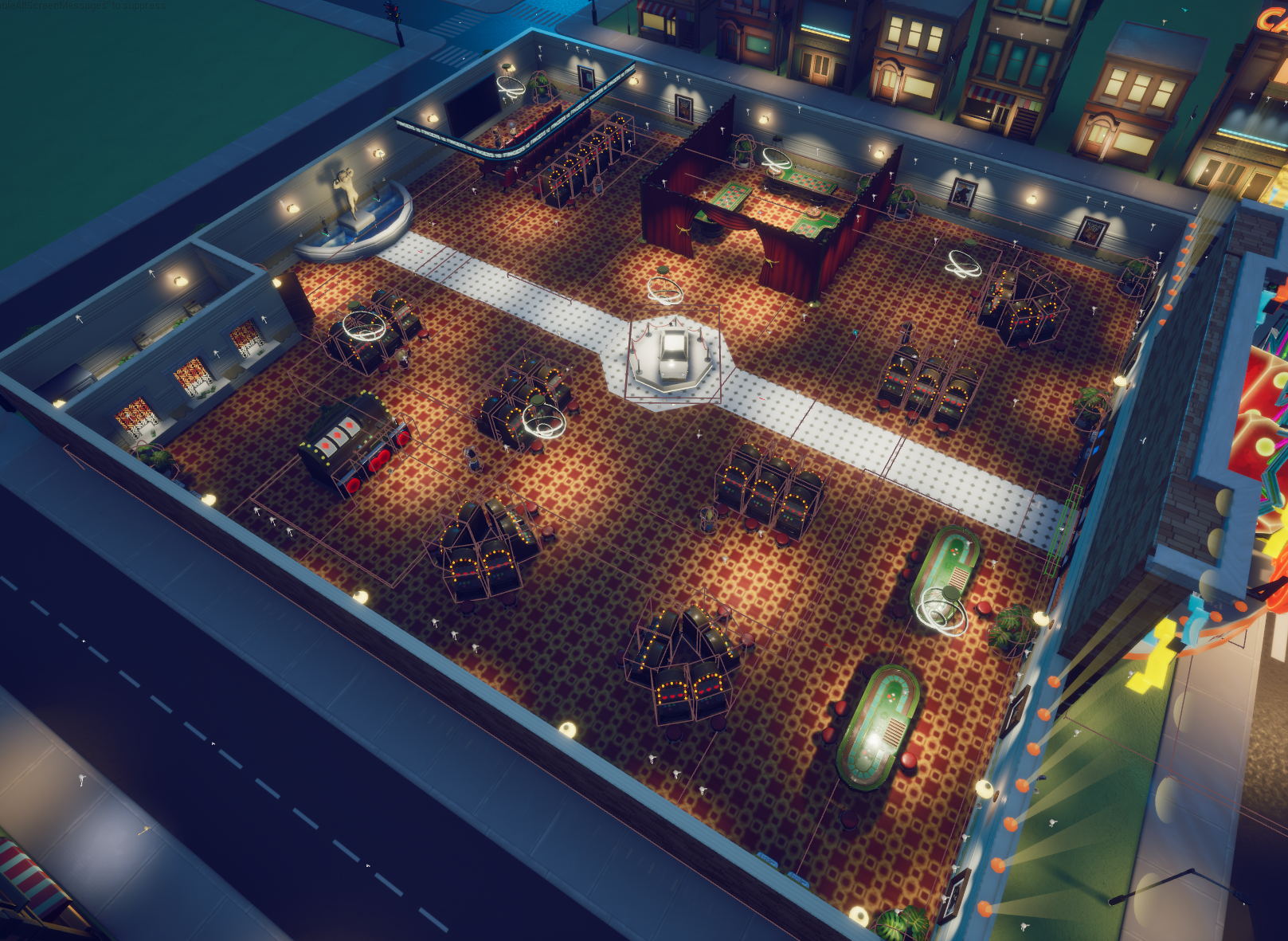
The casino was built to be Sticky Fingers’ largest level and the core concept behind it was ‘playground’. Rather than a defined goal to steal like in the jewelry store and the bank the players simply had to steal a set amount of value out of the casino instead. Another difference was that rather than escaping by returning to the van players would steal the prize car after filling it with gas, inspired by the finale of the Left 4 Dead 2 Dead Center campaign.
Goals
Give players the freedom to explore a large play area with their own goals.
Have special interactions that reward exploration.
Create a twist on the escape portion of the game.
Did it work?
Like the Jewelry Store, the Casino was mostly aligned with the goals set for it with some room for improvement. While originally multiple special interactions were wanted, due to time constraints we decided to cut them down to solely the playable giant slot machine. While the escape sequence worked how we wanted it, some players had trouble finding the jerrycans once they were able to be picked up. For them, rather than being a scramble to escape it became a tedious search.
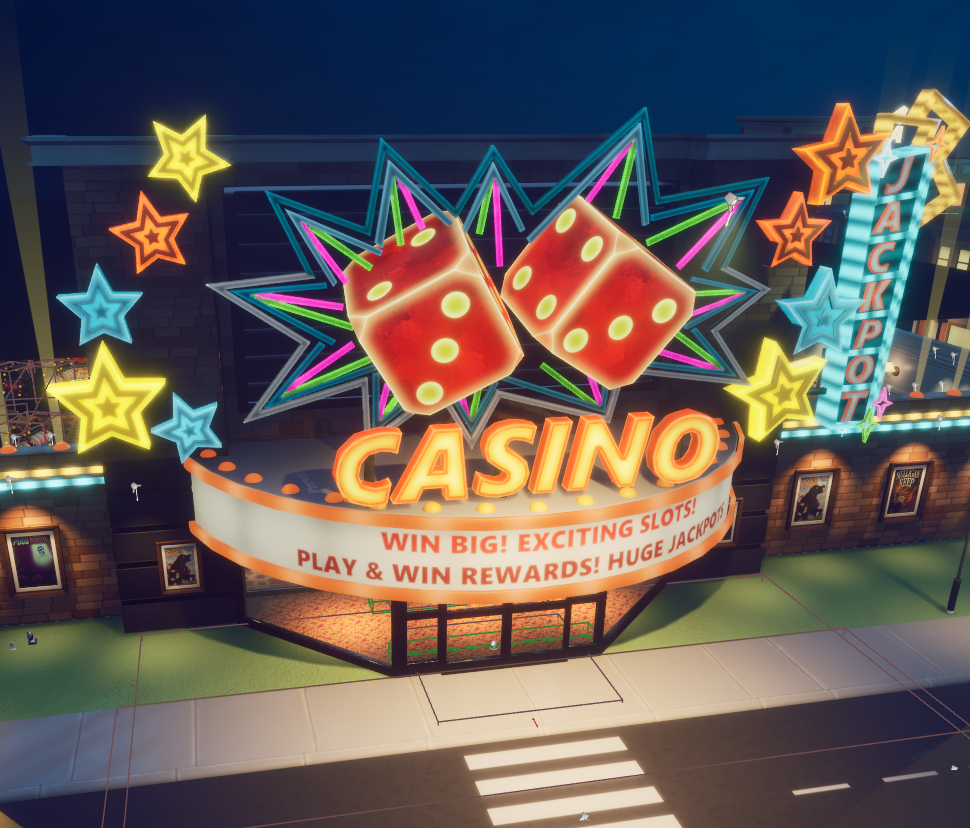
Front view of the Casino facade
Whiteboard to release of the Casino
Video of the slot machine in action

More Projects